70 mm Pouch Can Lane Capacity & Restock Cycle Calculator
Enter expected weekly can volume, active SKU flavors/strengths, and lane depth per column to calculate loaded tin capacity, service interval, and recommended wall or floor chassis.
Under-sizing lane depth forces expensive mid-week emergency restock runs and leaves high-demand mint or wintergreen strengths empty during peak Friday–Saturday bar surges. Over-sizing cabinet depth wastes wall clearance or requires floor anchoring where a slim 265 mm cabinet would suffice. Use the interactive sizing tool above to calculate total loaded can capacity, effective restock cycle days with a safety buffer, projected 30-day throughput, and recommended PouchVend chassis tier.
Sizing & Compliance Boundary: Calculations reflect mechanical geometry for standard 70 mm diameter × 24 mm thick cylindrical pouch tins only. PouchVend Systems is an independent commercial vending hardware manufacturer only, supplies zero nicotine or tobacco products, and is not affiliated with ZYN, Swedish Match, or Philip Morris International. Before purchasing hardware, review federal and local deployment rules in our US 21 CFR 1140.16 compliance overview and confirm site legality with qualified counsel.
Engineering Formulas Behind the Lane Sizing Model
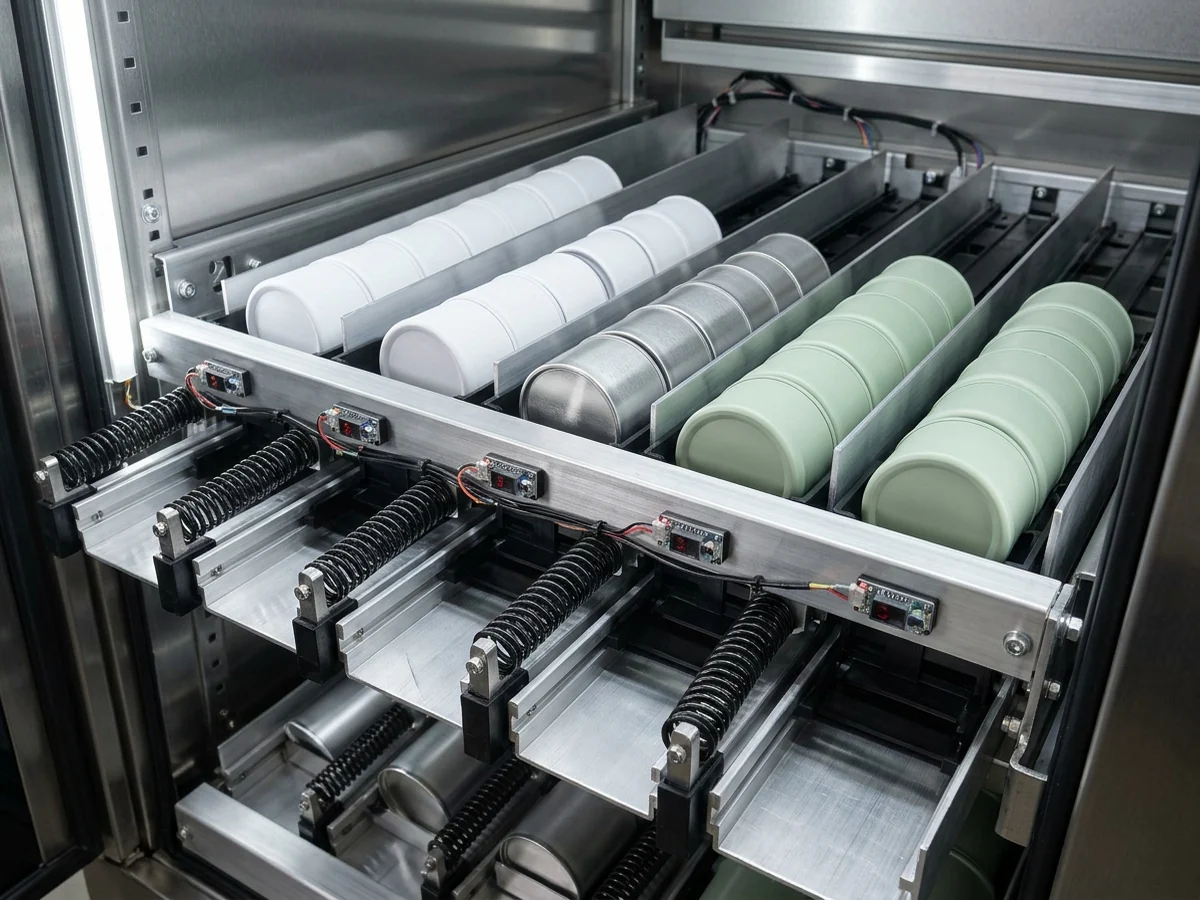
The calculator applies four mechanical and operational equations derived directly from PouchVend’s constant-force spring-pusher track geometry (see 70 mm round-can spring-pusher mechanics):
- Total Loaded Cabinet Capacity:
Total Cans = Active SKU Lanes × Cans Loaded per Lane. Standard wall cabinets (PV-SLIM-10, PV-WALL-18, PV-WALL-32, PV-COMBO-36) hold 9–12 cans per lane at 24 mm tin pitch; deep 400 mm tracks on PV-FLOOR-48 hold 12–16 cans per lane. - Usable Sell-Through Inventory Before Restock:
Usable Cans = Total Cans × (1 − Restock Buffer % / 100). Applying a 20% to 30% safety reserve accounts for uneven SKU velocity so fast-moving lanes trigger replenishment before hitting zero. - Target Restock Cycle (Days):
Service Days = Usable Cans / (Weekly Can Volume / 7). Hospitality route operators typically target a 10-to-14-day service interval for bars and 14-to-21 days for high-capacity casinos. - Projected 30-Day Throughput:
Monthly Cans = Weekly Can Volume × 4.285.
Reference Chassis Tier Benchmarks
Match your interactive calculator outputs against exact factory specifications across all five cabinets in our 21+ hardware specifications guide and hardware catalog:
| Model Code | Active 70 mm Lanes | Cans per Lane (24 mm Pitch) | Total Loaded Capacity | 20% Buffer Usable Stock | Restock Cycle @ 85 Cans/Wk | Restock Cycle @ 200 Cans/Wk |
|---|---|---|---|---|---|---|
| PV-SLIM-10 | 10 lanes | 9–10 cans | 90–100 cans | 72–80 cans | 5.9–6.6 days | Under-sized (2.5–2.8 days) |
| PV-WALL-18 | 18 lanes | 10–12 cans | 180–216 cans | 144–173 cans | 11.9–14.2 days | 5.0–6.1 days |
| PV-WALL-32 | 32 lanes | 10–12 cans | 320–384 cans | 256–307 cans | 21.1–25.3 days | 9.0–10.7 days |
| PV-COMBO-36 | 24 round + 12 box | 10–12 round | 240–288 cans (+ boxes) | 192–230 cans | 15.8–18.9 days | 6.7–8.1 days |
| PV-FLOOR-48 | 48 lanes | 12–16 cans | 576–768 cans | 461–614 cans | 38.0–50.6 days | 16.1–21.5 days |
Accounting for Asymmetric SKU Velocity (Paired-Lane Allocation)
A common mistake in first-time vending sizing is assuming every lane sells evenly. In real 21+ bar and nightclub traffic, demand follows a steep Pareto curve: three or four popular mint, wintergreen, and smooth strengths routinely account for 55% to 65% of total unit volume, while specialty flavors turn much slower.
- If you carry 10–12 distinct SKUs in an 18-lane PV-WALL-18: Assign 6 to 8 high-velocity lanes as paired redundant tracks (24 cans per top SKU) and allocate remaining single lanes to lower-turn flavors.
- If you carry 14–18 distinct SKUs in a 32-lane PV-WALL-32: Triple-lane your top 3 sellers (36 cans per SKU) and double-lane your next 6 sellers (24 cans per SKU), activating cloud lane-linking so the controller fails over automatically when a primary track empties mid-shift.
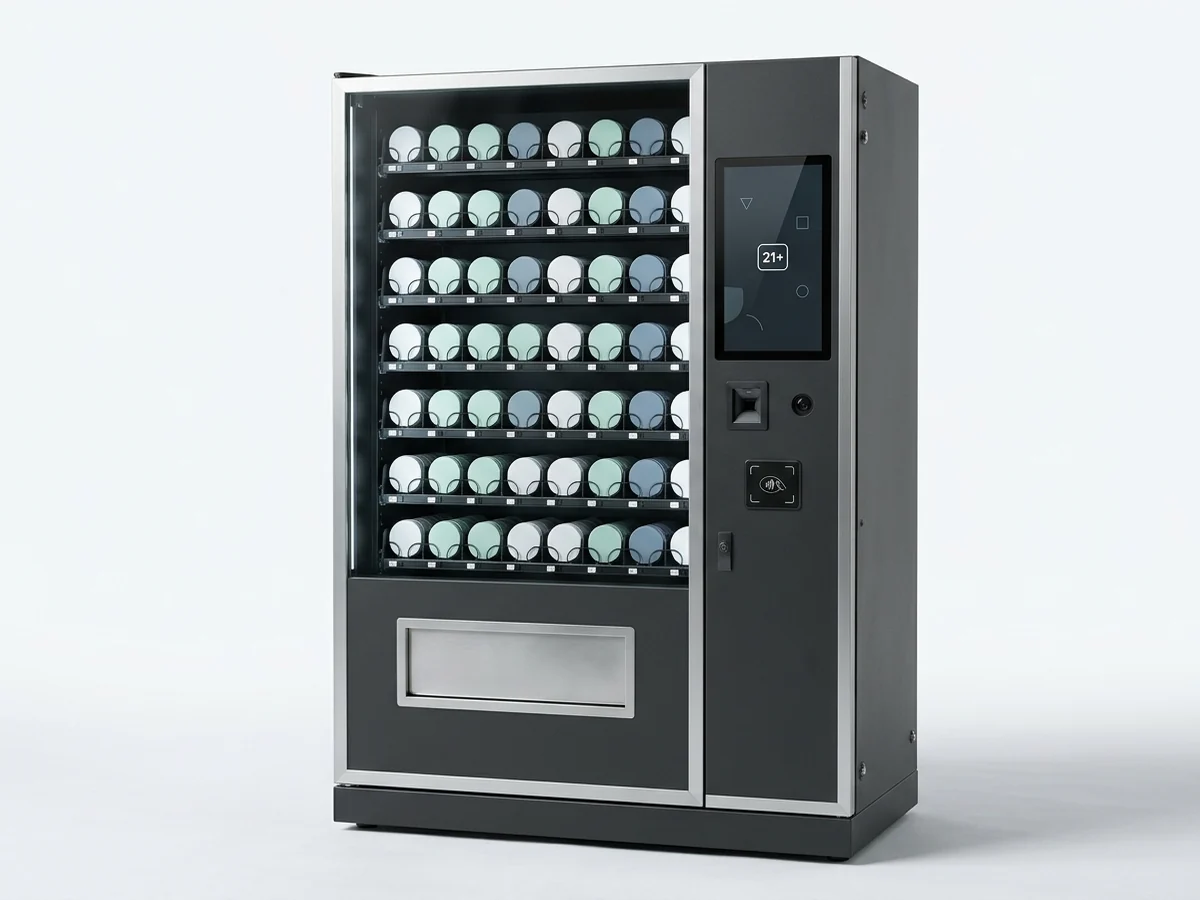
- If you manage a high-volume 24-hour venue with PV-FLOOR-48: Deep 16-can tracks paired across 48 lanes deliver 32 to 48 cans per top SKU without mid-week service trips, and an optional lower keyed reserve locker stores master cartons right inside the base plinth.
Planning Compliance and Privacy Architecture Alongside Mechanical Sizing
Mechanical capacity is only half of a compliant deployment specification. Before sending your calculator output to our factory desk for a formal quotation, review both foundational regulatory guides parented under this planning tool:
- US 21 CFR 1140.16 Adult-Only Facility Rules & Compliance Checklist: Understand federal adult-only premises requirements, state/municipal vending prohibitions, and legal counsel review checkpoints.
- Zero-Retention ID Scanner Privacy & Offline Verification Architecture: Compare barcode-only PDF417 operation versus on-device optical verification, volatile RAM data wiping, and state biometric privacy considerations (such as Illinois BIPA).
Once legal counsel confirms site eligibility and your preferred verification mode, compare physical installation trade-offs in our wall-mount kiosks hub and floor-standing kiosks hub, or click Send Sizing via WhatsApp above to receive a dimensioned approval drawing and direct factory quotation.
Standard & Custom-Engineered Models
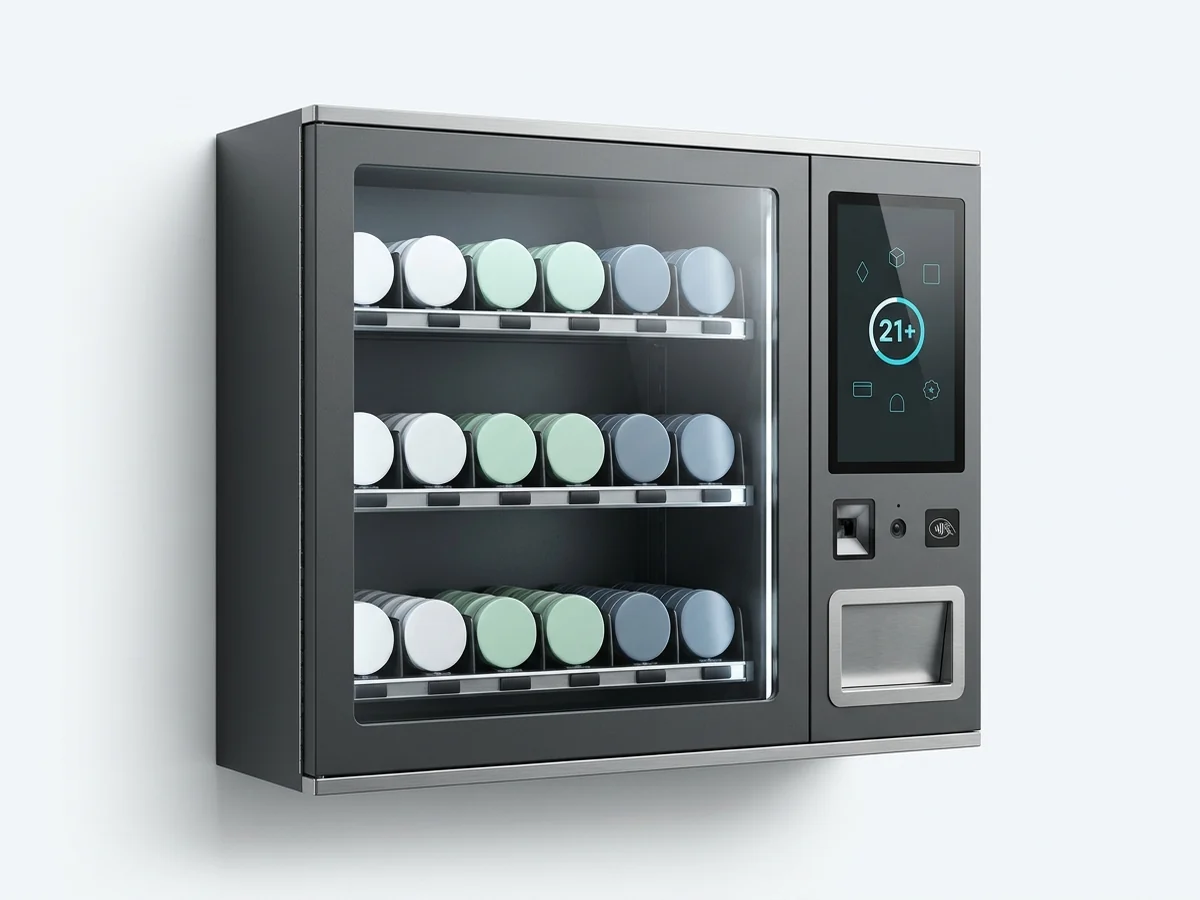
18-Lane Wall-Mount 21+ Age-Verified Pouch Vending Machine
18-lane wall-mount 21+ pouch vending machine (760×265×780 mm) holding up to 216 standard 70 mm cylindrical cans with 15.6-inch display, 2D PDF417 ID scanner, optical verification camera, and infrared drop sensors.