Commercial 21+ age-verified vending cabinets are built to specification rather than sold as fixed consumer appliances. Total capital expenditure across a single pilot unit or a multi-venue hospitality rollout varies meaningfully depending on structural enclosure tier, active spring-pusher lane density, age-verification sensor stack, cellular connectivity hardware, custom architectural finishes, and destination freight class. Because quoting an unverified blanket number misleads buyers on true landed cost, PouchVend Systems prepares itemized direct-factory quotations matched to your exact mechanical and regulatory build sheet.
Commercial Scope & Compliance Notice: PouchVend Systems supplies commercial vending machine hardware only and does not sell nicotine or tobacco products, process consumer tobacco retail transactions, or guarantee venue sales volume. We are an independent manufacturer with no affiliation with ZYN, Swedish Match, or Philip Morris International. Buyers must confirm federal (21 CFR 1140.16), state, and local legality with qualified counsel before commissioning equipment.
Six Primary Hardware Cost Drivers in a Factory Quote
When evaluating quotations across vending manufacturers, separate base sheet-metal cabinet pricing from the verification electronics, lane assemblies, and recurring third-party payment services that determine total lifetime operating cost.
| Cost Component | Hardware Scope & Engineering Variable | Impact on Configuration Tier |
|---|---|---|
| 1. Steel Chassis & Mounting System | 1.5 mm wall cabinets (34–92 kg) vs. 2.0 mm welded PV-FLOOR-48 (188 kg) with 3-point T-handle lock, laminated glass, and optional bolt-down floor pedestal | Drives structural steel weight, powder-coat area, crating footprint, and freight class |
| 2. Active Lane Count & Pusher Assemblies | 10 lanes (PV-SLIM-10), 18 lanes (PV-WALL-18), 32 lanes (PV-WALL-32), 36 hybrid lanes (PV-COMBO-36), or 48 deep lanes | Each lane integrates extruded aluminum rails, a constant-force stainless pusher, polycarbonate stop lip, and stepper actuator |
| 3. Age-Verification Sensor Stack | Flush AAMVA 2D PDF417 optical barcode imager alone vs. dual-layer PDF417 + wide-angle optical liveness camera + diffused anti-glare optics | Optical anti-spoof modules and low-light glass bezels add hardware BOM cost over barcode-only builds |
| 4. Touchscreen & Embedded Controller | 10.1-inch (PV-SLIM-10), 15.6-inch IPS (wall/combo tier), or 21.5-inch IPS (PV-FLOOR-48) + industrial mainboard | Larger capacitive displays and multi-item cart controllers increase display and power-supply sizing |
| 5. Connectivity & Payment Readiness | Standard NAMA MDB harness + Wi-Fi/Ethernet vs. dual-SIM 4G LTE cellular kit, high-gain external antenna, or optional bill acceptor | Cellular kits eliminate reliance on venue Wi-Fi; third-party Nayax/Cantaloupe terminals carry separate merchant fees |
| 6. Finish, Branding Neutrality & Packaging | Standard matte-graphite architectural powder coat vs. custom RAL color, brushed stainless/bronze trim, export plywood crating, and air vs. sea freight | Single-unit air shipments carry higher per-unit logistics cost than consolidated palletized ocean freight |
Separating Factory Hardware Capex from Recurring Third-Party Operating Costs
Operators planning multi-venue rollouts should budget distinctly for one-time factory hardware procurement versus ongoing operational services managed outside PouchVend Systems:
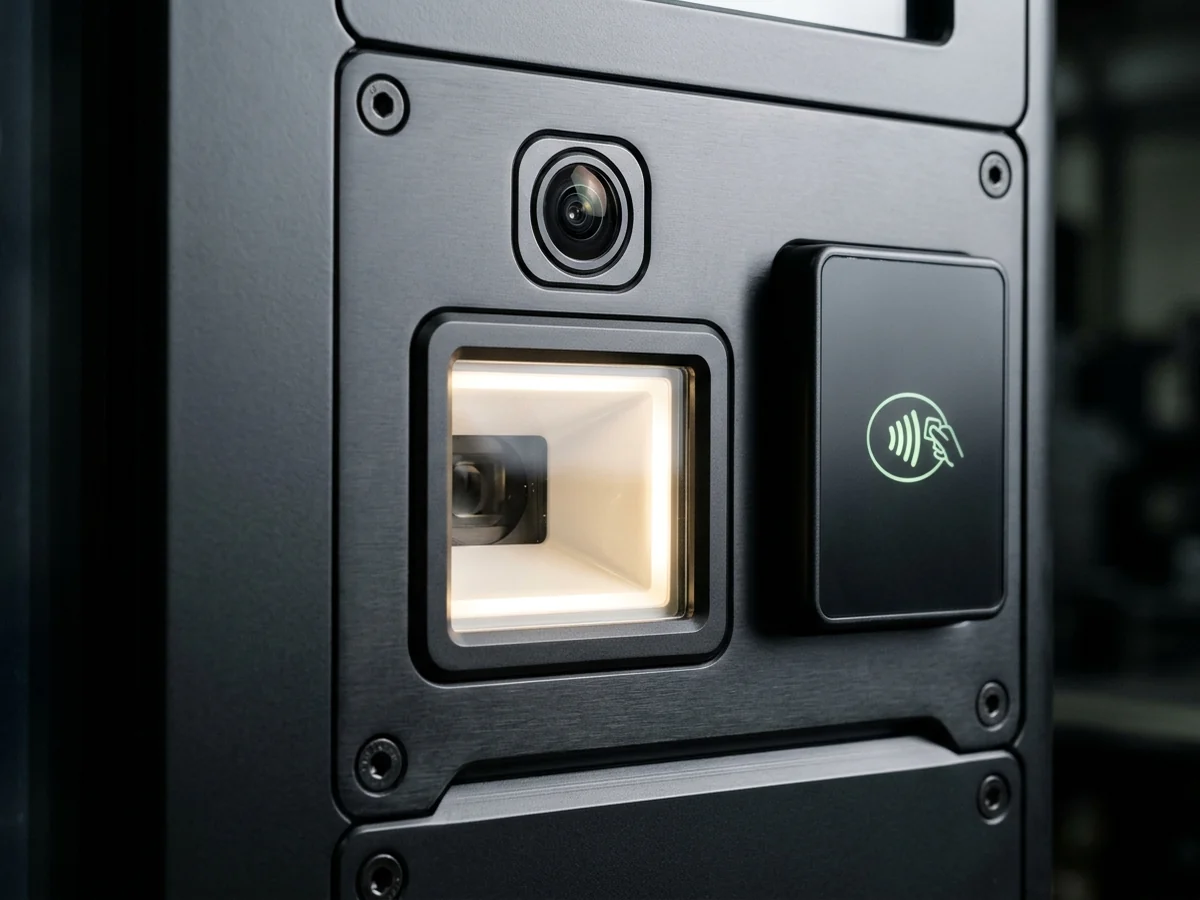
- One-Time Hardware & Site Setup: Factory cabinet build, optional floor pedestal or recessed wall-box flange, shipping crate and customs/delivery logistics, local structural wall anchoring or floor bolting, and licensed electrical outlet placement (standard 110–240 V AC, 40–110 W draw).
- Third-Party Cashless & Cellular Services: Contactless EMV terminals (such as Nayax VPOS Touch or Cantaloupe ePort) are contracted directly with your chosen payment processor and carry processor-specific monthly telemetry and card-processing rates. Optional 4G LTE data SIM plans run through your local mobile carrier.
- Compliance, Licensing & Inventory: Retail tobacco/nicotine permits where mandated by state/local authorities, legal compliance review, commercial general liability coverage, venue revenue-share or flat-space agreements, and wholesale consumables procured strictly from licensed distributors.
Why Higher-Lane Cabinets Often Lower Route Operating Expense
Comparing unit hardware capex in isolation frequently leads new operators to under-size lane capacity for busy weekend bars. Every unscheduled restock trip consumes route labor, parking, and fuel—and an empty top-selling lane on Saturday night forfeits peak demand.
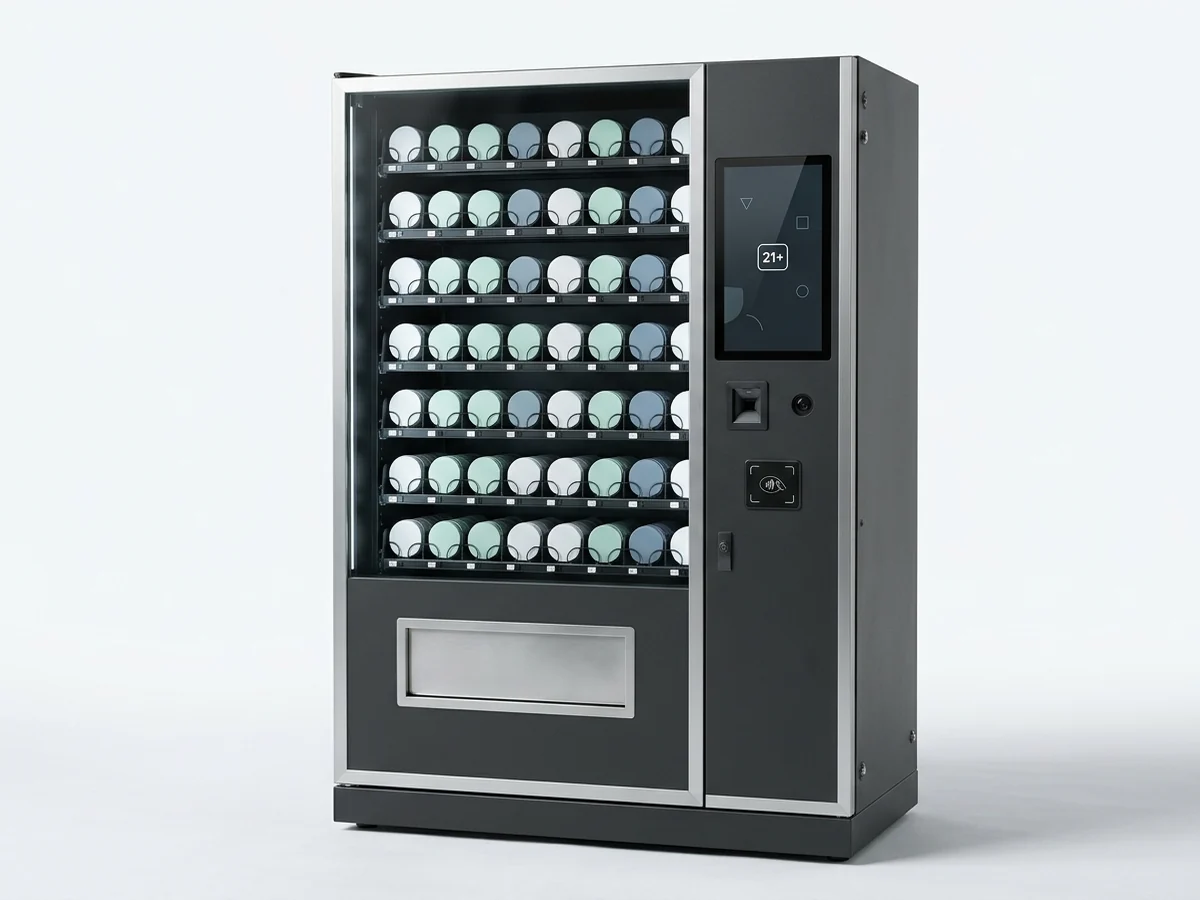
- Upgrading from PV-SLIM-10 (90–100 cans) to PV-WALL-18 (180–216 cans) doubles loaded capacity inside a 265 mm slim wall footprint, cutting restock trips in half for mid-volume lounges.
- Upgrading from PV-WALL-18 to PV-WALL-32 (320–384 cans) lets operators double- or triple-lane top mint/wintergreen movers with automatic lane failover.
- Selecting PV-COMBO-36 protects hardware capital with tool-free adjustable 50–105 mm box dividers if local regulations or venue assortments shift toward non-nicotine convenience items.
- Deploying PV-FLOOR-48 (576–768 cans) supports high-volume casinos and major nightclubs on clean two-week service cycles.
Use our 70 mm Pouch Vending Lane Capacity Calculator to quantify your exact service-cycle impact before locking a model tier.
What to Include for a Fast, Accurate Direct-Factory Quotation
To receive a formal itemized factory quote with dimensioned approval drawings and freight options, prepare six details before messaging our engineering desk on WhatsApp or email:
- Target Model or Lane Tier: Specify PV-SLIM-10, PV-WALL-18, PV-WALL-32, PV-COMBO-36, or PV-FLOOR-48 (or your target active SKU count and weekly can volume).
- Mounting Condition: Structural stud wall, concrete/masonry wall, recessed cavity, or optional bolt-down steel floor pedestal.
- Age-Verification Firmware Mode: Zero-retention 2D PDF417 barcode-only profile or dual-layer PDF417 + on-device optical verification profile aligned with your counsel’s guidance.
- Payment & Connectivity Spec: Preferred MDB reader brand (Nayax / Cantaloupe / supply-own), optional 4G LTE dual-SIM kit, and voltage standard (110–120 V or 220–240 V).
- Order Quantity & Finish: Pilot single unit vs. multi-venue batch (5, 10, 20+ cabinets) and standard matte-graphite vs. custom architectural RAL powder coat.
- Destination Postal Code & Delivery Preference: Commercial loading dock vs. liftgate delivery and air-express vs. ocean consolidation timeline.
Review technical chassis details in the 21+ hardware specifications guide, browse all five builds in the hardware catalog, or prepare site readiness with the bar and nightclub 21+ deployment guide.
Standard & Custom-Engineered Models
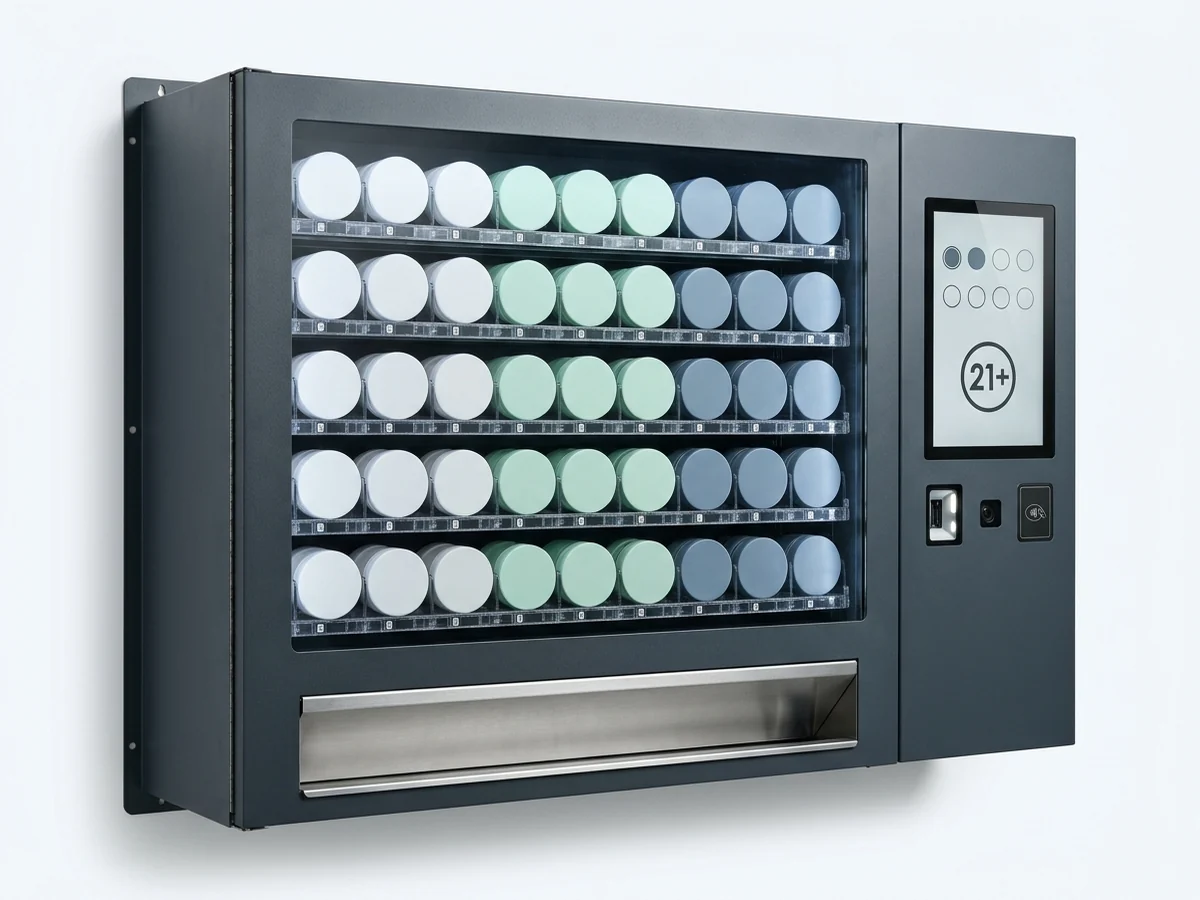
32-Lane Dual-Column Wall-Mount 21+ Pouch Vending Machine
32-lane dual-column wall-mount kiosk (1040×280×890 mm) holding 320–384 cylindrical 70 mm cans with 15.6-inch 21+ display, dual-layer ID verification, stainless lockable chute, and cloud alerts.