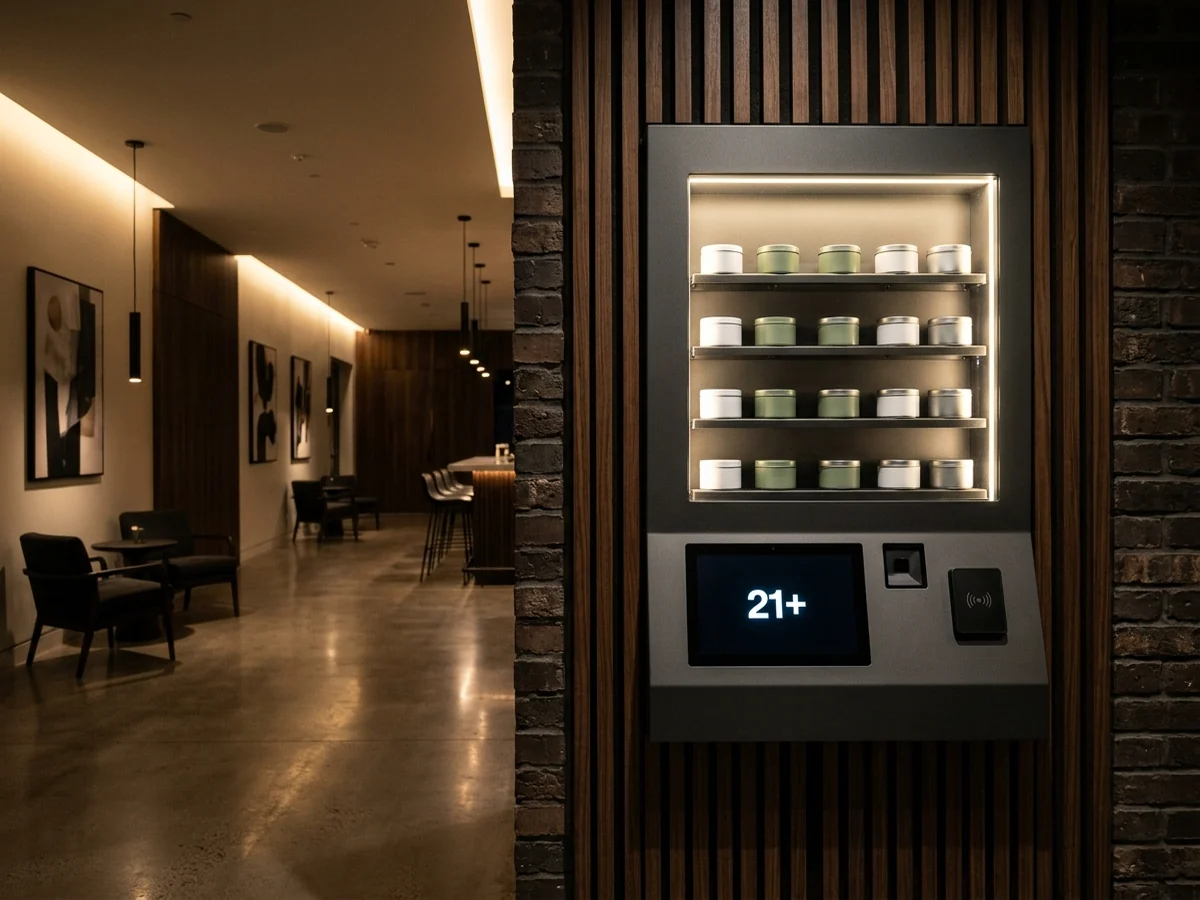
Deploying an age-verified vending machine inside a strict 21+ bar, nightclub, brewery taproom, or private adult lounge is an operational engineering sequence—not a drop-off appliance install. Venue operators who verify legal eligibility first, pick the right structural location, provision reliable cellular or Ethernet telemetry, and link restock schedules to peak weekend turns avoid compliance friction, Wi-Fi dropouts, and mid-shift stockouts.
Legal Gatekeeper First: PouchVend Systems supplies neutral commercial vending hardware only, sells zero nicotine or tobacco consumables, and is not affiliated with, sponsored by, or endorsed by ZYN, Swedish Match, or Philip Morris International. Under US federal law (21 CFR 1140.16), tobacco and nicotine vending machines are restricted strictly to facilities where no person under 21 is present or permitted to enter at any time. State, county, and municipal bans vary widely—never sign a placement agreement or order hardware before qualified legal counsel verifies local legality and retail licensing for the exact street address.
Step 1: Venue Eligibility and Mixed-Hours Disqualification Check
Before taking a tape measure to a bar wall, verify whether the venue maintains strict 21+ entry at all times. Under federal facility restrictions, a restaurant-bar that allows families for lunch and switches to 21+ after 9:00 PM presents acute regulatory risk compared to an establishment whose doors prohibit under-21 entry around the clock. Review full statutory boundaries in our US 21 CFR 1140.16 compliance overview.
Even inside permanently restricted 21+ venues, operators should confirm three compliance prerequisites with counsel:
- Jurisdiction Vending Permissibility: Confirm that neither the state statute nor the county/city municipal code prohibits automated nicotine vending outright.
- Retail Licensing & Signage: Verify whether the licensed venue owner or route operator holds the required state/local tobacco or nicotine retail permit and posts mandated minimum-age notices adjacent to the unit.
- Biometric & ID-Scanning Privacy Rules: Confirm whether local statutes (such as Illinois BIPA or state ID-retention rules) require selecting Mode A (zero-retention 2D PDF417 barcode-only) versus Mode B (PDF417 + on-device optical check). See our zero-retention ID scan privacy guide.
Step 2: Matching Hardware Footprint to Venue Format
Selecting the right cabinet avoids corridor encroachment while eliminating unnecessary restock labor. Compare all five configurations in the 21+ hardware specifications guide or explore the hardware catalog.
| Venue Archetype | Typical Weekly Volume | Recommended Hardware | Placement & Mounting Strategy |
|---|---|---|---|
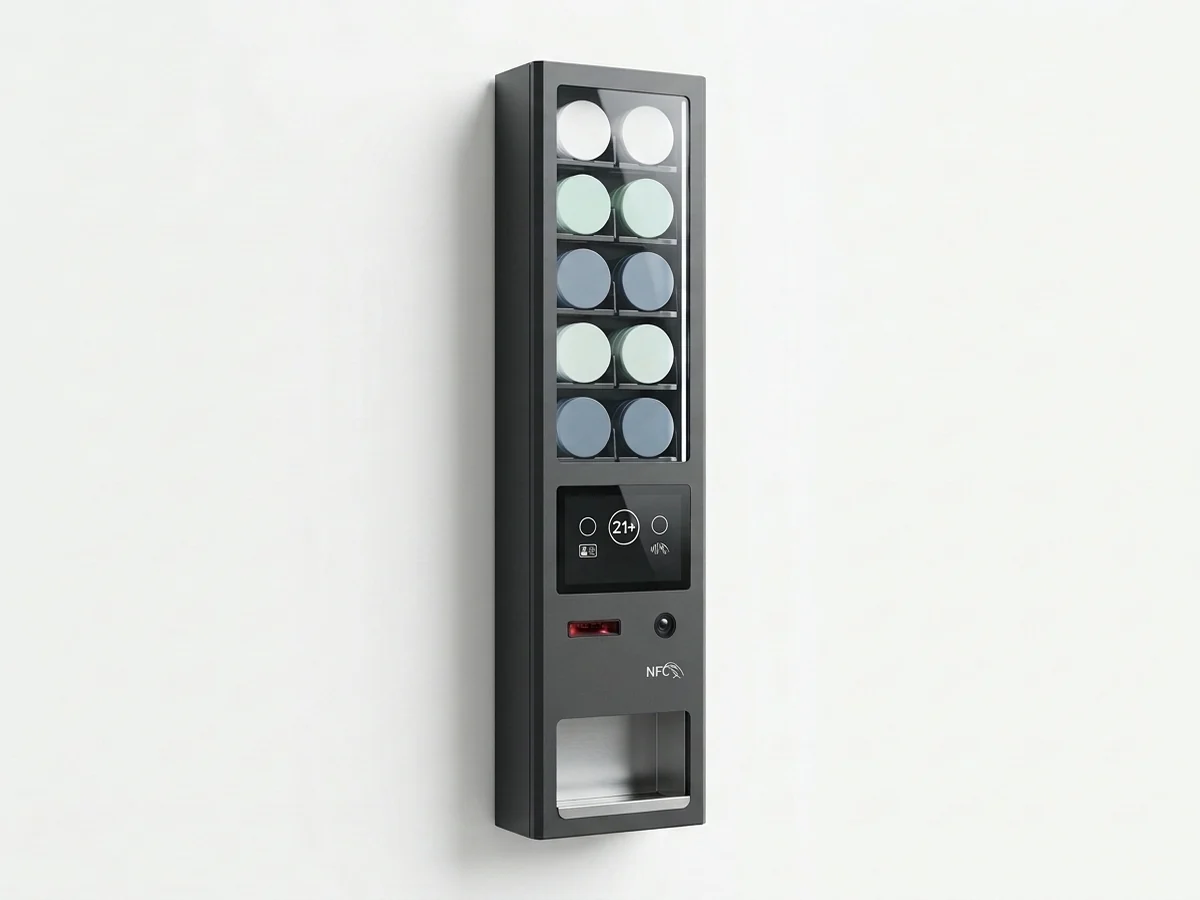
| Speakeasy, Cigar Parlor, Private Club | 25–45 cans/wk | PV-SLIM-10 (10 lanes, 90–100 cans) | Narrow 340 × 230 mm pilaster or recessed alcove near host stand |
| Neighborhood 21+ Bar, Brewery, Taproom | 50–110 cans/wk | PV-WALL-18 (18 lanes, 180–216 cans) | 265 mm slim wall mount across two 16-in studs in main bar corridor |
| High-Volume Sports Bar, Weekend Nightclub | 110–220 cans/wk | PV-WALL-32 (32 lanes, 320–384 cans) | Dual-column wall flange spanning three studs; double-lane top flavors |
| Adult Hotel Lounge, Mixed Convenience Bar | 90–200 units/wk | PV-COMBO-36 (24 round + 12 box lanes) | Wall flange or floor pedestal combining round tins with chargers/mints |
| 24-Hour Casino Floor, Major Nightclub Complex | 220–450+ cans/wk | PV-FLOOR-48 (48 lanes, 576–768 cans) | 520 mm slim floor monument with 4-bolt slab anchor and plinth reserve locker |
Step 3: Site Survey — Placement, Sightlines, Power, and Signal
Poor placement cuts transaction visibility and creates maintenance headaches. During your site walk-through, check five physical criteria:
- High-Visibility, Staff-Supervised Sightline: Mount the cabinet inside a well-trafficked interior bar corridor, lounge transition wall, or patio entry vestibule visible to venue staff or security cameras—never tucked inside an unsupervised exterior alcove.
- Structural Substrate & ADA Clearance: Verify solid 16-inch wood studs, steel backing plates, or masonry behind wall-mount positions (loaded weight ranges from ~38 kg on PV-SLIM-10 to ~108 kg on PV-COMBO-36). Confirm wall projection clearances and operable reach heights with the venue’s building code advisor. Review mounting details in the wall-mount hub and floor-standing hub.
- Dedicated Concealed 110–240 V AC Outlet: Every cabinet draws only 40 W to 110 W—less than a commercial bar television—with zero compressor noise or heat exhaust. Use the rear recessed power channel so patrons cannot unplug the machine.
- Cellular Signal Test (4G LTE vs. Venue Wi-Fi): Guest bar Wi-Fi networks frequently drop packets or throttle terminals on crowded Saturday nights. Run a cellular RSRP check at the exact wall position; for basement or concrete-walled clubs, specify the internal dual-SIM 4G LTE kit with optional external antenna lead or run hardwired Ethernet directly into the rear knockout.
- Lighting Check: Although the recessed 2D PDF417 imager carries diffused soft-white anti-glare LEDs, avoid aiming overhead track spotlights directly into the laminated glass door or touchscreen face.
Step 4: Commissioning, Curfew Lockout, and SKU Planogram
Before unlocking live sales on opening night, execute a structured five-point commissioning test:
- Test 21+ Hardware Rejection: Scan an expired credential and verify that the local firmware blocks payment wake-up and logs only an anonymized fail event. Confirm zero raw ID image persistence in controller settings.
- Program Curfew Schedule & Staff Lockout: Configure cloud operating-hours windows aligned to the venue’s liquor license hours and test the manager instant remote lockout button.
- Verify Infrared Drop Gate & Pre-Auth Void: Run live test vends on at least one lane per tray to confirm crisp 25–35 g can detection across the optical curtain and verify MDB payment settlement on your Nayax or Cantaloupe portal.
- Allocate Paired Redundant Lanes: In 18-, 32-, and 48-lane cabinets, assign top-moving mint and wintergreen strengths to two or three linked lanes so automatic failover eliminates Saturday-night sell-outs.
- Set Low-Stock Telemetry Thresholds: Configure cloud alerts at 20–25% remaining lane inventory so route replenishment arrives before top SKUs empty.
Step 5: Ongoing Route Replenishment and Audit Hygiene
Size your restock interval before ordering cabinets using our 70 mm Pouch Vending Lane Capacity & Restock Calculator. Review factory configuration variables and multi-unit batch quote requirements on nicotine pouch vending machine cost factors, and inspect our ID scanner hardware hub for scanner maintenance best practices (periodic microfiber wiping of the sapphire scanner window and optical drop curtain lenses keeps read speeds sub-second).
Standard & Custom-Engineered Models
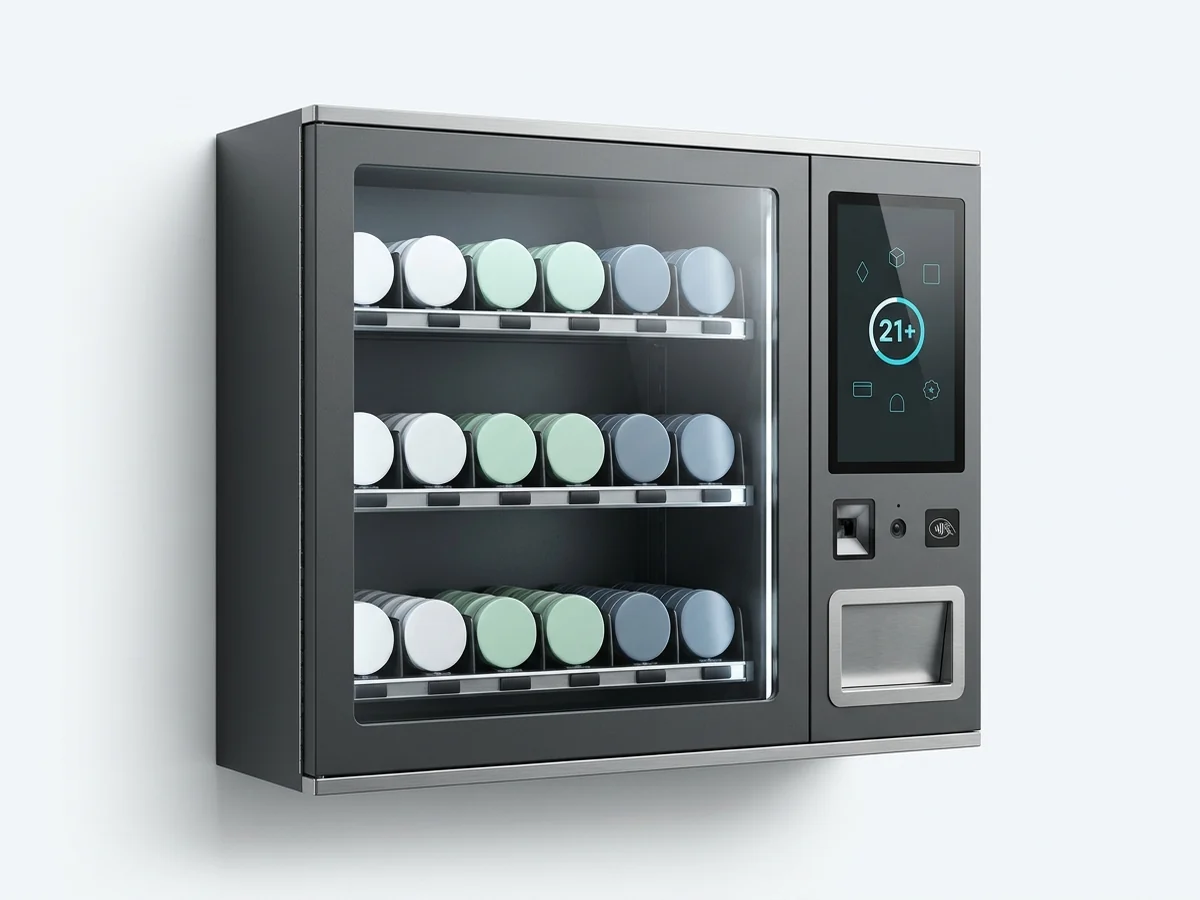
18-Lane Wall-Mount 21+ Age-Verified Pouch Vending Machine
18-lane wall-mount 21+ pouch vending machine (760×265×780 mm) holding up to 216 standard 70 mm cylindrical cans with 15.6-inch display, 2D PDF417 ID scanner, optical verification camera, and infrared drop sensors.